
Gold and silver packaging
ImenGold anti-counterfeit packaging
Buyers should be able to check product information and the packaging’s authenticity features. ImenGold anti-counterfeit packaging is designed with that purpose in mind.
Applications
Packaging suited to the product
Choose a piece to place it inside the packaging.
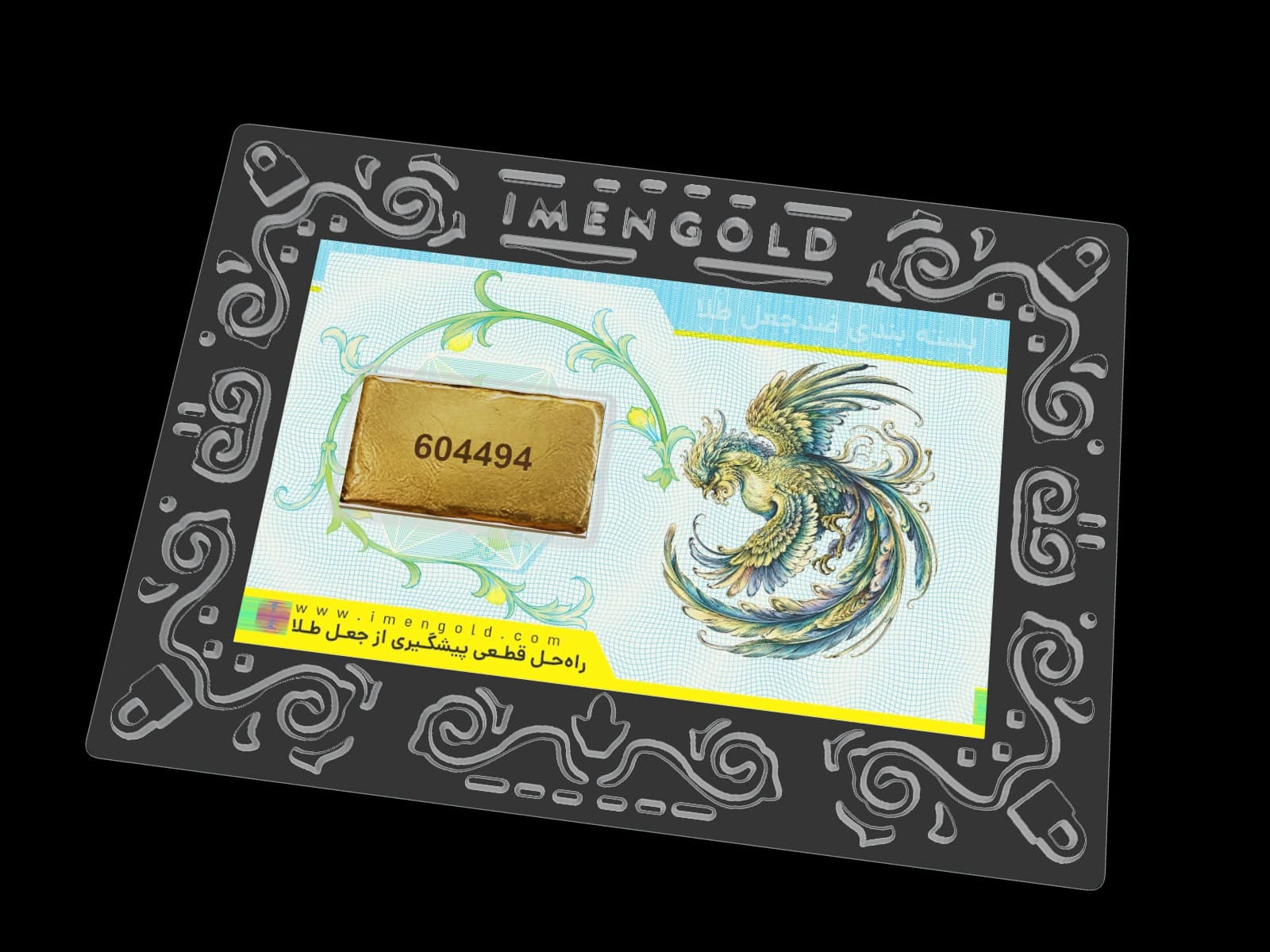
Selected piece placed
Specify the product type, packaging and required components in the ImenGold platform to view the order price.
The item’s shape and the space needed for specifications guide the design of melted gold packaging. Product placement and information are defined in the card design.
What to review before choosing
- Item shape and dimensions
- Space for product specifications
- Packaging method
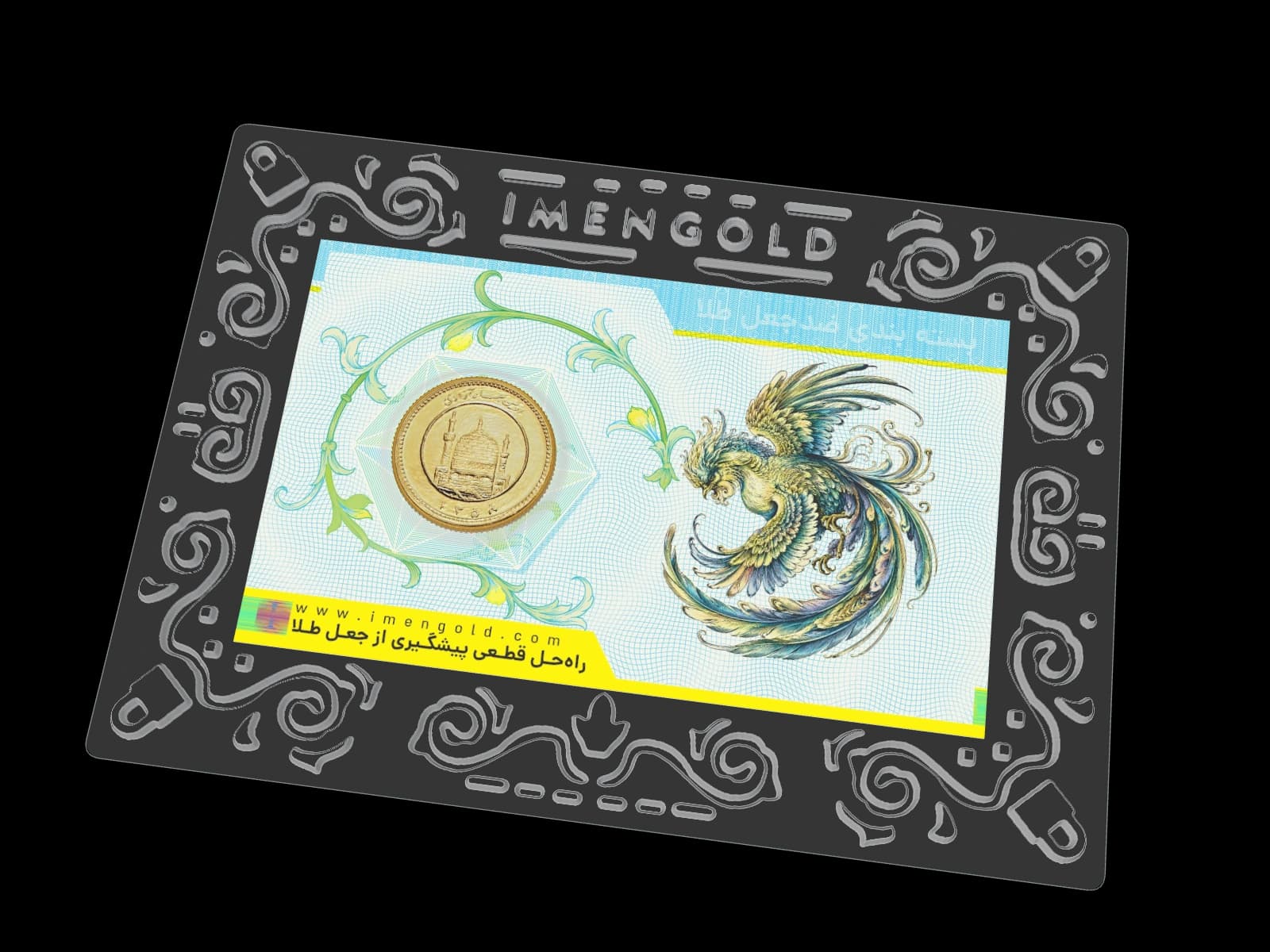
Coin placement is matched to its size. The card design and security-feature positions take account of how the coin can be viewed and inspected.
What to review before choosing
- Coin size
- Placement in the card
- Access to security features
The Parsian plaque’s dimensions determine the card size and placement area. Product specifications and brand design are arranged alongside the plaque.
What to review before choosing
- Plaque dimensions
- Legible specifications
- Bonding of packaging layers
Gold bar packaging is designed around the item’s size and physical protection. Bar placement needs to work with the packaging layers and production method.
What to review before choosing
- Bar dimensions
- Physical protection
- Layer materials and bonding
Card size and item placement are also tailored to silver bars. The final design brings the bar’s presentation together with product specifications and security features.
What to review before choosing
- Proportionate card size
- Information placement
- Inspectable security features
Anti-counterfeit structure
Packaging security features
Card material and packaging structure, security design and printing, holograms and embossing, and links to product information form this structure. Their coordination can make signs of tampering easier to inspect; no single feature guarantees authenticity.
- 01
Card and packaging structure
Coloured and fluorescent fibres in security paper are visible under UV light while the paper itself has no unusual reflection. After pressing, embossing and lamination, opening the packaging can damage its structure and reveal signs of tampering.
- 02
Security printing and features
Security printing can include complex designs, dedicated patterns, security inks and colours, inspectable effects and holograms. Some features can be checked with light, heat, viewing angle or specified tools and are harder to reproduce with ordinary printing.
- 03
Identification and product information
The card identifier, and NFC where included in the structure, provide routes to product information. This information should be compared with the product details and the packaging’s physical condition.
Packaging structure
Packaging structure and assembly
In lamination, the card and product sit between packaging layers. Layer shape, product placement and the bonding method are coordinated with the packaging structure. Lamination alone does not guarantee prevention of opening, tampering or counterfeiting.
- 01
Prepare the layers
Layer shapes and item placement are prepared according to the packaging design.
- 02
Bonding and quality control
The layers are bonded using a suitable method; layer bonding, product placement and the final appearance are inspected.
Related projects

Anti-Counterfeit Cards and Packaging
Motiha melted gold
Melted gold packaging with a custom Motiha brand design.
Project details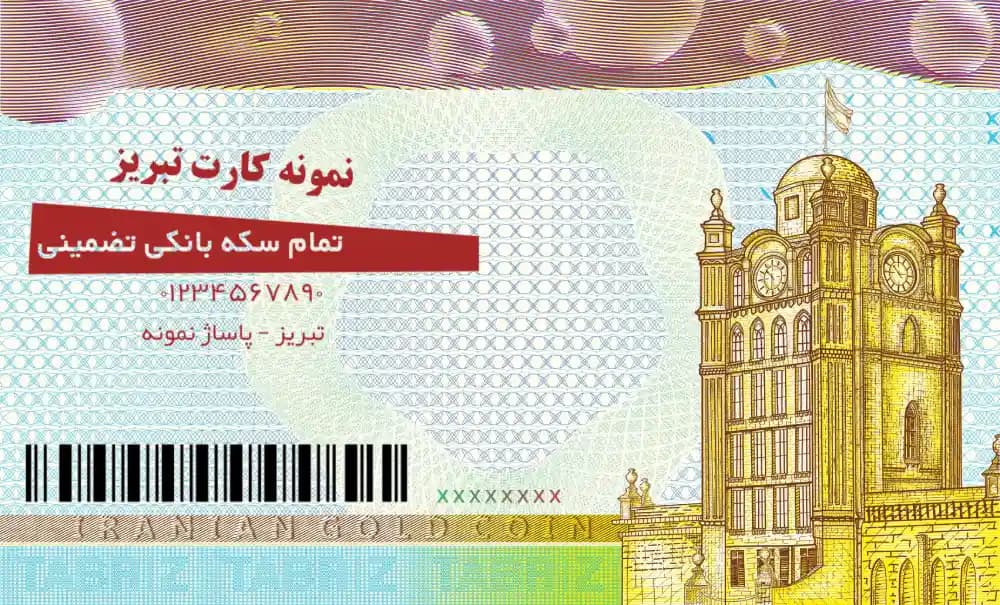
Anti-Counterfeit Cards and Packaging
Tabriz Gold and Jewelry Union
Bank-issued coin packaging bearing the name and logo of the Tabriz Gold and Jewelry Union.
Project details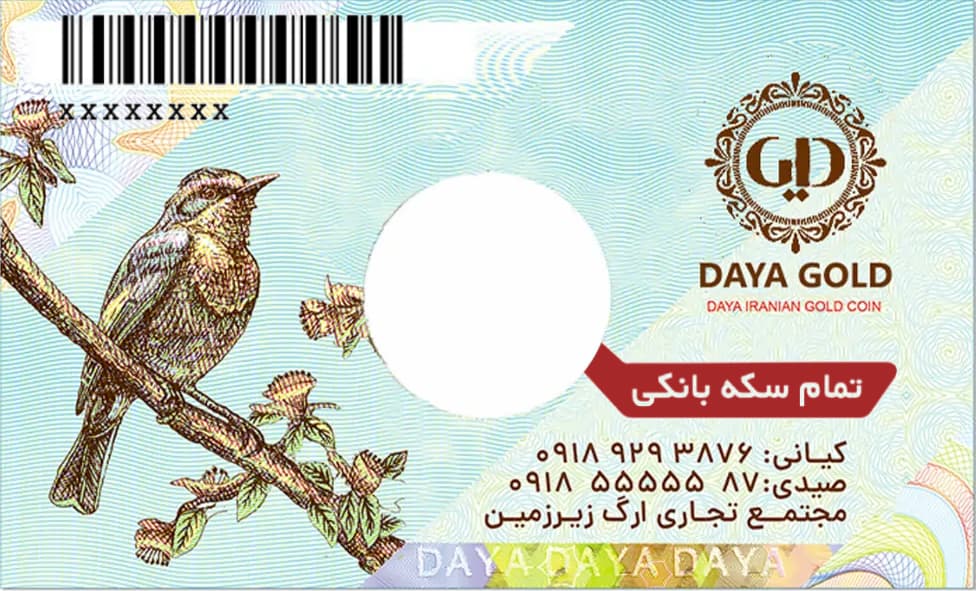
Anti-Counterfeit Cards and Packaging
Dayagold
Coin packaging featuring the Dayagold brand identity.
Project detailsExplore further
Related cards and equipment
Dedicated pages explain NFC and Void cards, presses and embossing dies in more detail.